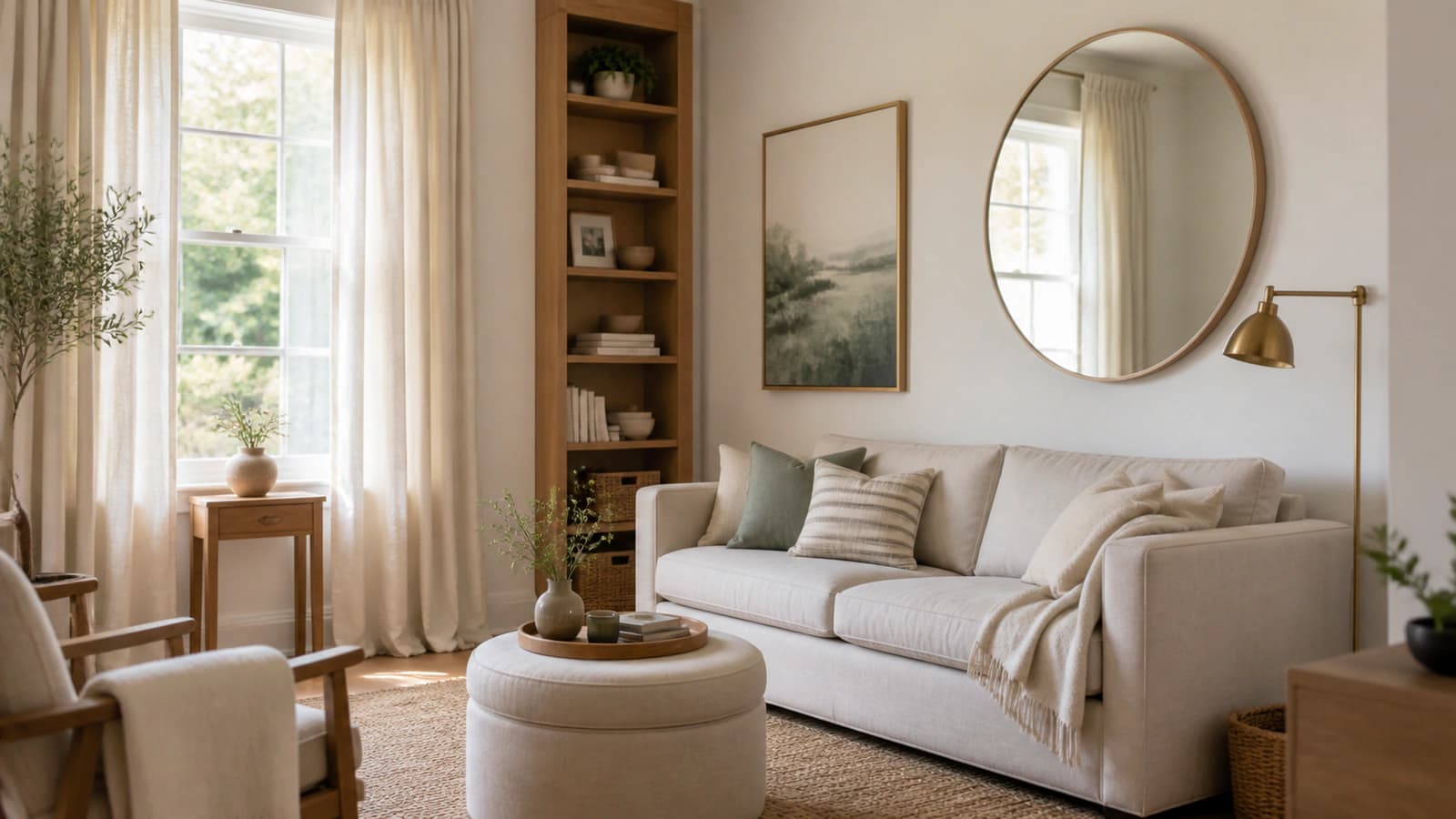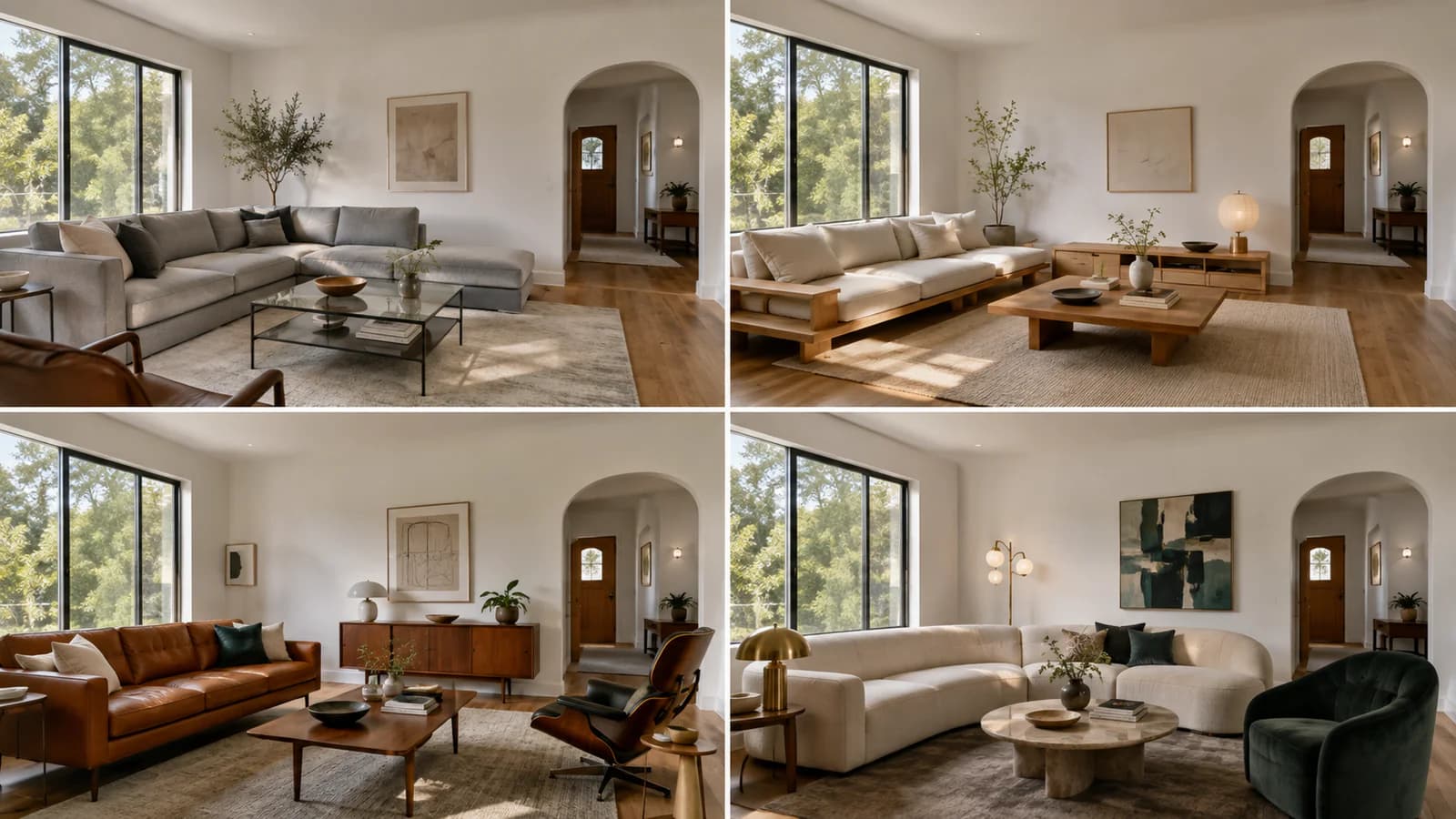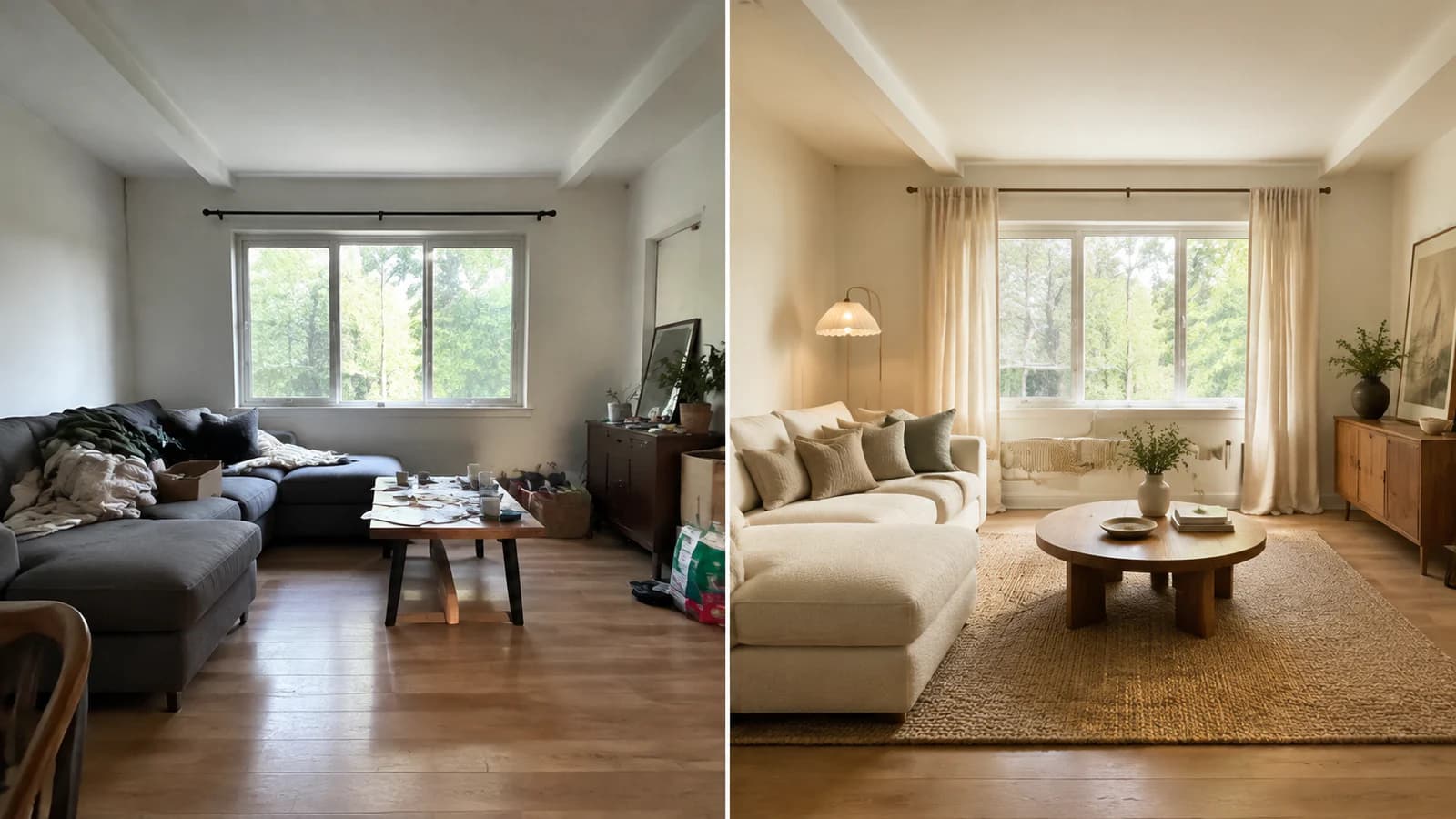
Or maybe the room is fine, but you keep buying small pieces of decor because you cannot quite name what is missing. That is where good interior design decisions actually start: not with buying more things, but with understanding the space you already have.
Start with the room, not Pinterest
Pinterest and Instagram are great for inspiration, but you are looking at someone else's house. Different windows. Different ceiling height. Different light. Different furniture. And no trace of your family's actual stuff.
So skip "how do I copy this room" and ask instead: what is this room trying to become? That single reframe makes every decision after it easier. If you are not sure how to answer it yet, our guide to finding the interior design style that fits your home will get you to a direction in ten minutes.
Fix the layout before the color palette
Before you touch paint swatches, look at how people move through the space. Can two people sit and talk without raising their voices? Does the sofa face something worth facing? Is the TV the main event, or is it competing with everything else in the room?
A gorgeous room with a bad layout still feels off. Layout is the foundation everything else sits on.
Do not automatically push furniture against the walls
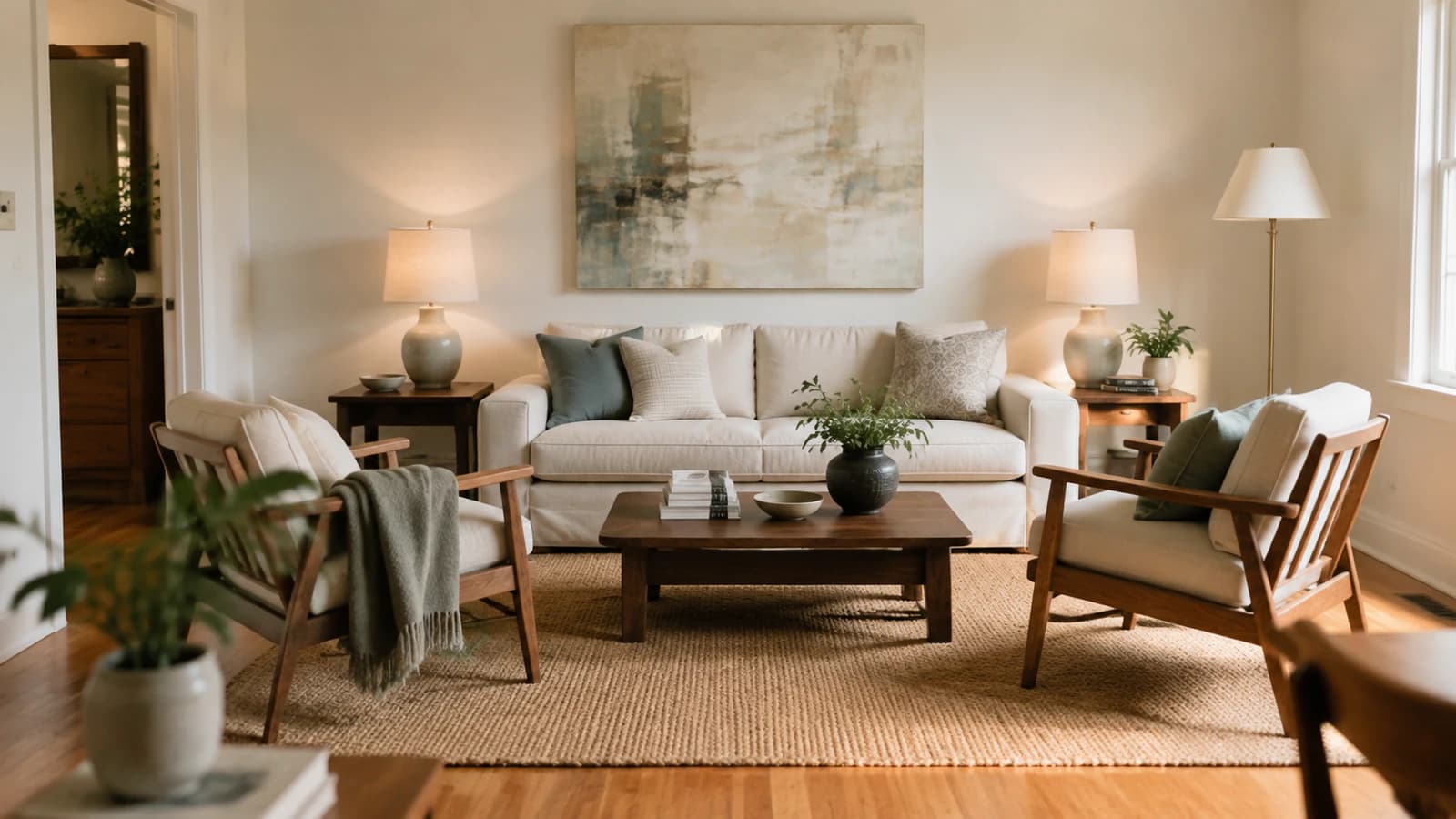
It is the default move, and sometimes it is correct. But it can also leave a room feeling hollow in the middle. Try building a defined conversation area instead: a sofa, two chairs, a rug and a coffee table can create a real zone even in a modest-sized room.
Respect scale
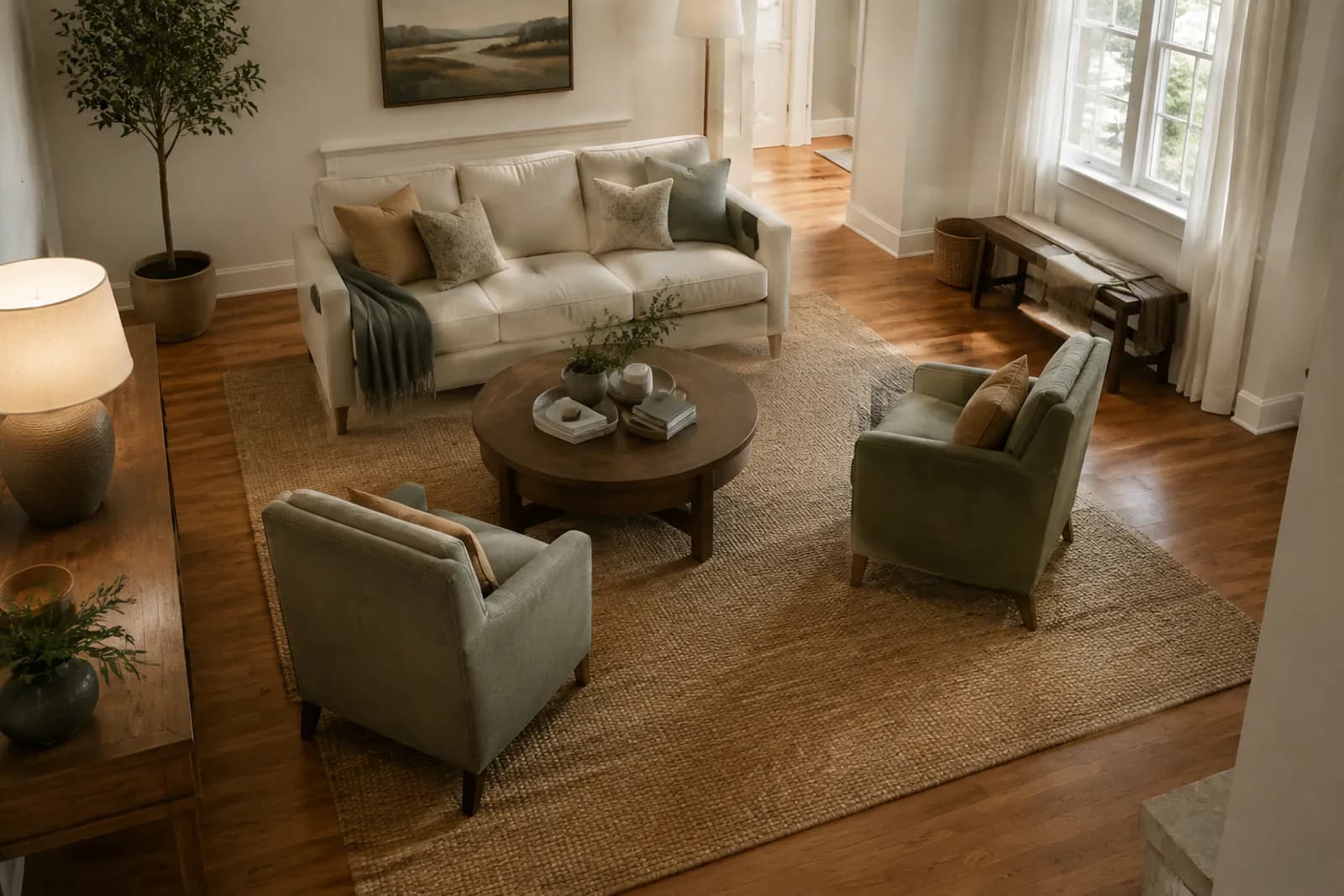
An oversized sectional in a small apartment is not automatically luxurious. It is just big. And a rug that is too small under a large coffee table can make an otherwise nice room feel unmoored. Match furniture size to room size before you fall in love with a piece online. Working with a genuinely tight footprint? The small house guide goes deeper on furniture that earns its space.
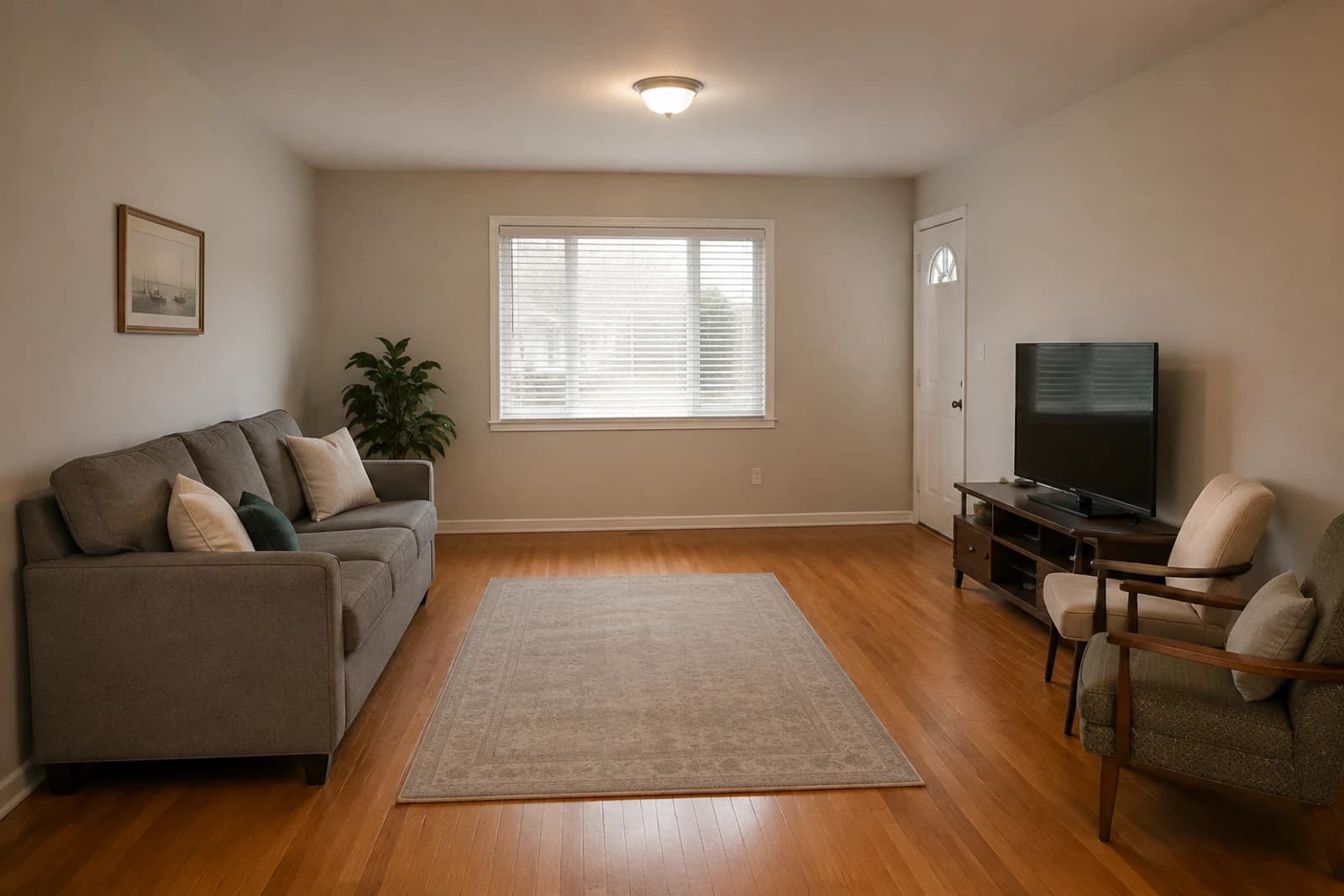
Lighting is doing more work than you think
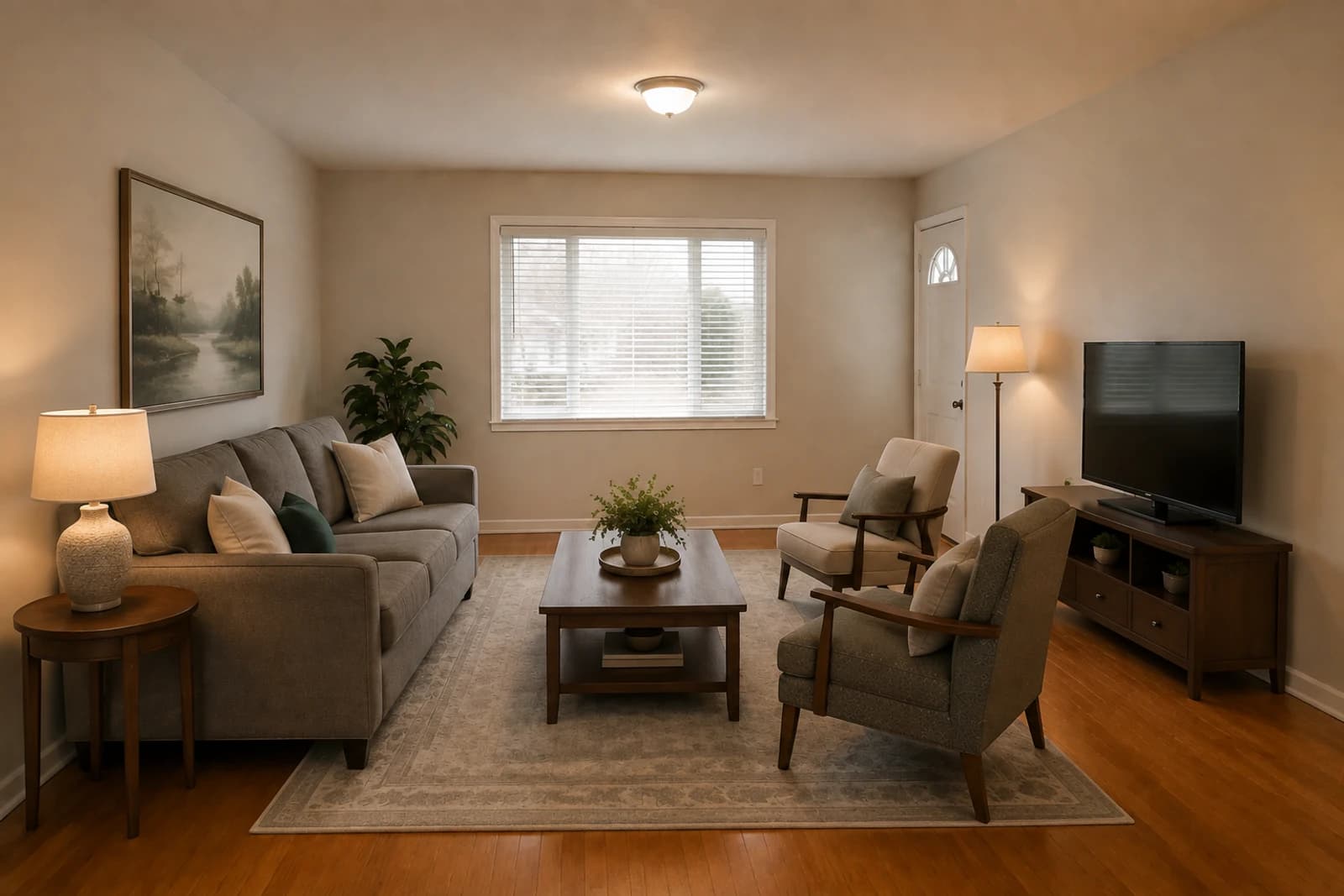
You can nail the furniture and still end up with a flat, uninviting room if the lighting is an afterthought. Layer it:
| Layer | Job | Typical fixture |
|---|---|---|
| General | Enough light to see the whole room | A ceiling fixture on a dimmer |
| Task | Light where you actually do something | A floor lamp beside the reading chair |
| Warmth | Pools of light at seated eye level | Table lamps on side tables and consoles |
| Accent | Draw the eye to what deserves it | A picture light over art, or a small uplight on a plant |
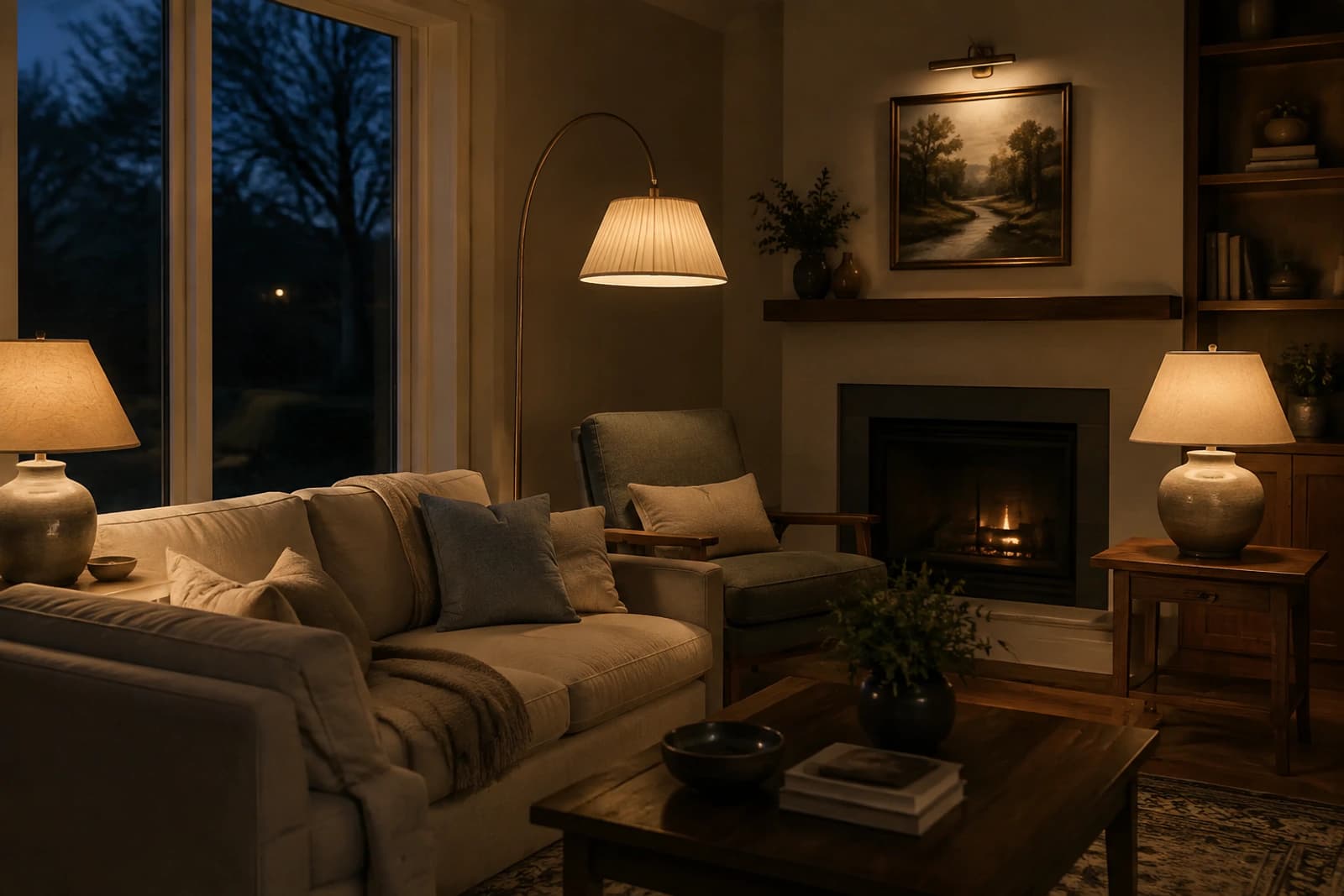
Add personality slowly
A living room should not look like a catalog spread. Books, photographs, art, travel finds, plants, textiles: these are not filler. They are what makes the space read as yours instead of a showroom floor.
Try it before you buy it
This is the part that saves real money. Instead of guessing whether a cream sectional or a walnut console will actually work in your room, you can see it first. Clavis lets you upload a photo of your actual living room, describe the direction you want, and generate a photorealistic redesign built around the room you have, not a generic template. From there, you can explore real, shoppable products within the design. If you are curious how that works under the hood, read how AI interior design works.
One change at a time
If you are not sure where to start, do not buy twelve things at once. Work down this list and stop when the room feels right:
- 01Fix the layout
- 02Improve the lighting
- 03Add or replace the rug
- 04Introduce artwork
- 05Add accessories last
You may find your room needed a lot less than you thought. And if the living room opens onto the kitchen, the two should make sense side by side; our kitchen interior design guide covers how to keep them in conversation.
Good design decisions start with understanding the space you already have, not with buying more things.