Remove what is not necessary first
Small rooms do not have the visual slack for furniture that is not earning its place. Before buying anything, ask what job the piece performs. "It looks nice" is a fine answer, as long as it is not also blocking the walkway.
Choose furniture that earns its footprint
Look for pieces that do more than one job:
| Piece | First job | Second job |
|---|---|---|
| Storage ottoman | Footrest or coffee table | Hides throws, games, cables |
| Nesting tables | One side table | Three when guests arrive |
| Bed with built-in drawers | Sleeping | Replaces a dresser |
| Extendable dining table | Two-seat daily table | Six seats for dinner |
| Compact sofa | Seating scaled to the room | Leaves a real walkway |
| Wall-mounted lighting | Light where you read | Frees the floor and the nightstand |
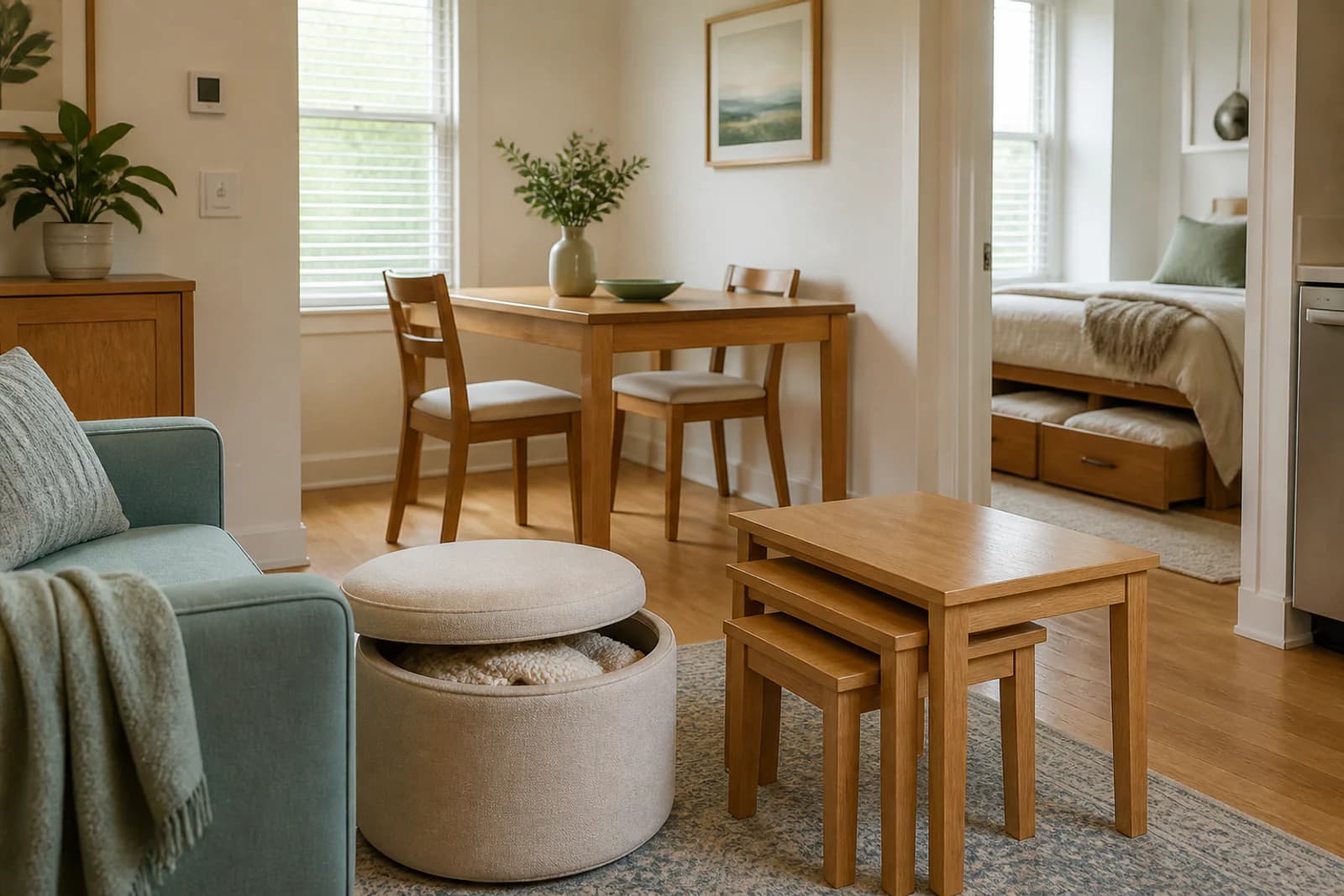
Every square foot is doing work in a small space, so make the furniture match that.
Do not go tiny across the board
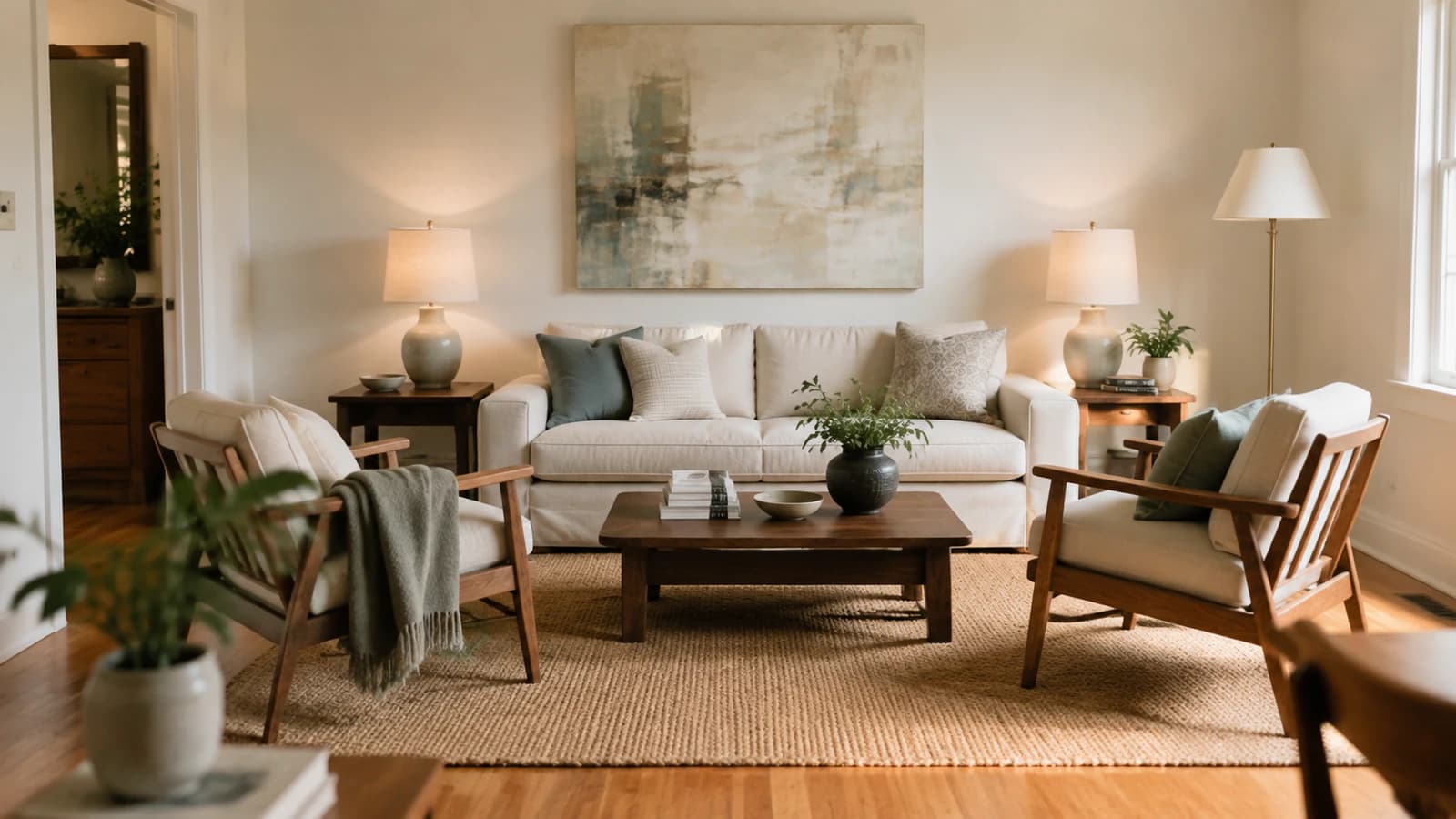
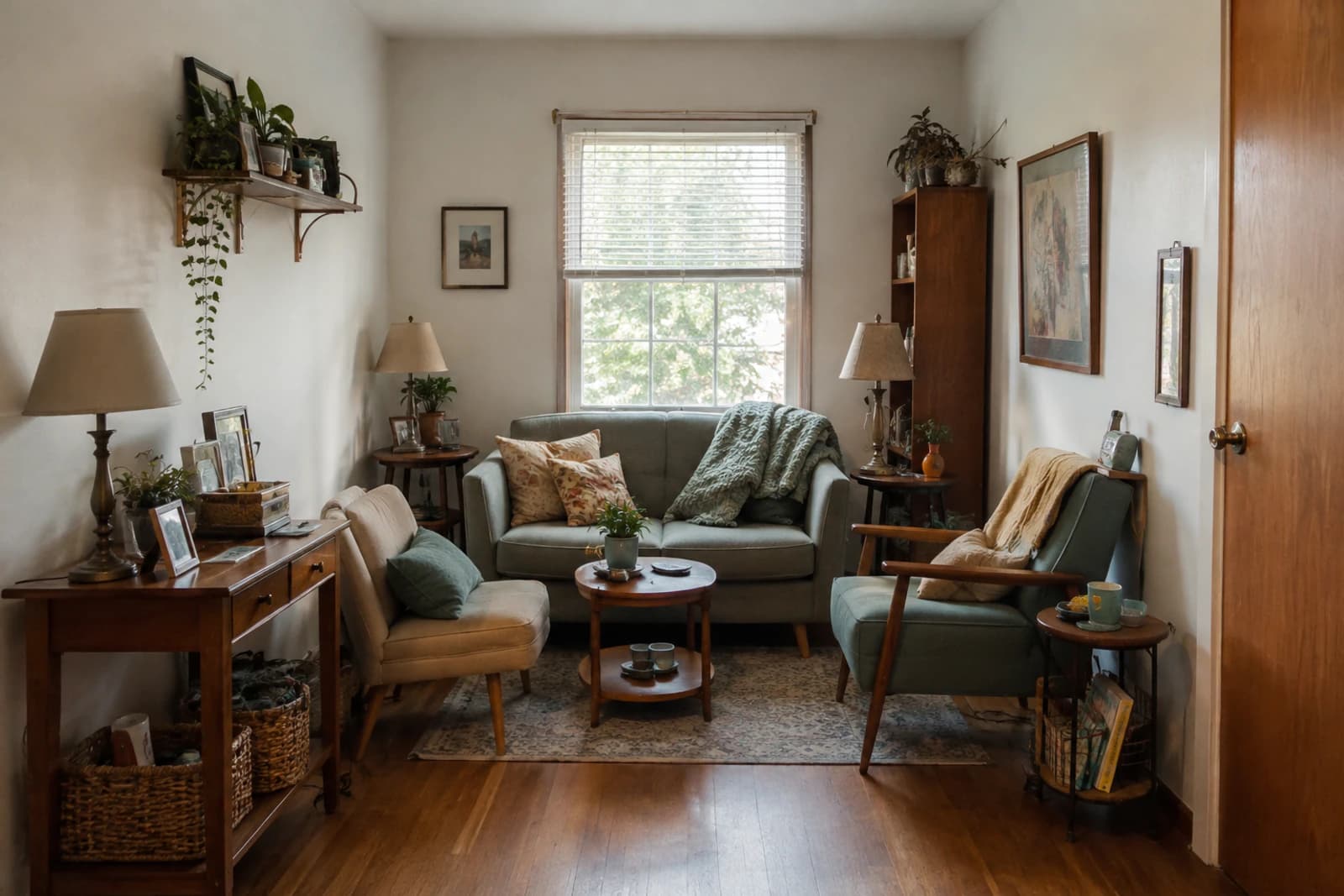
This is the most common overcorrection. A small room filled entirely with tiny furniture can actually look more cluttered, not less, because now there are more objects instead of fewer. One properly scaled sofa often reads better than two undersized chairs and a loveseat crammed into the same footprint.
Use light strategically
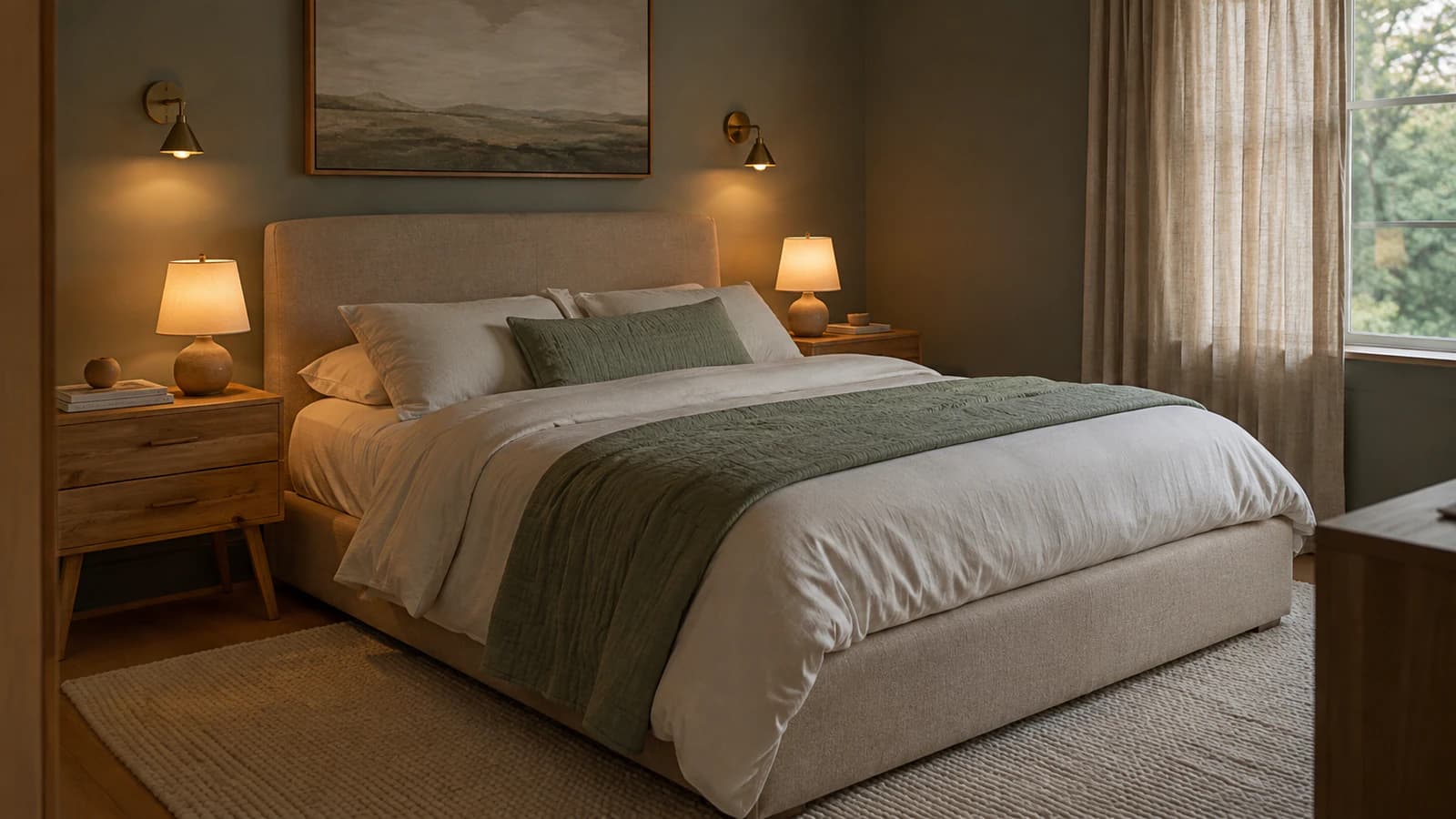
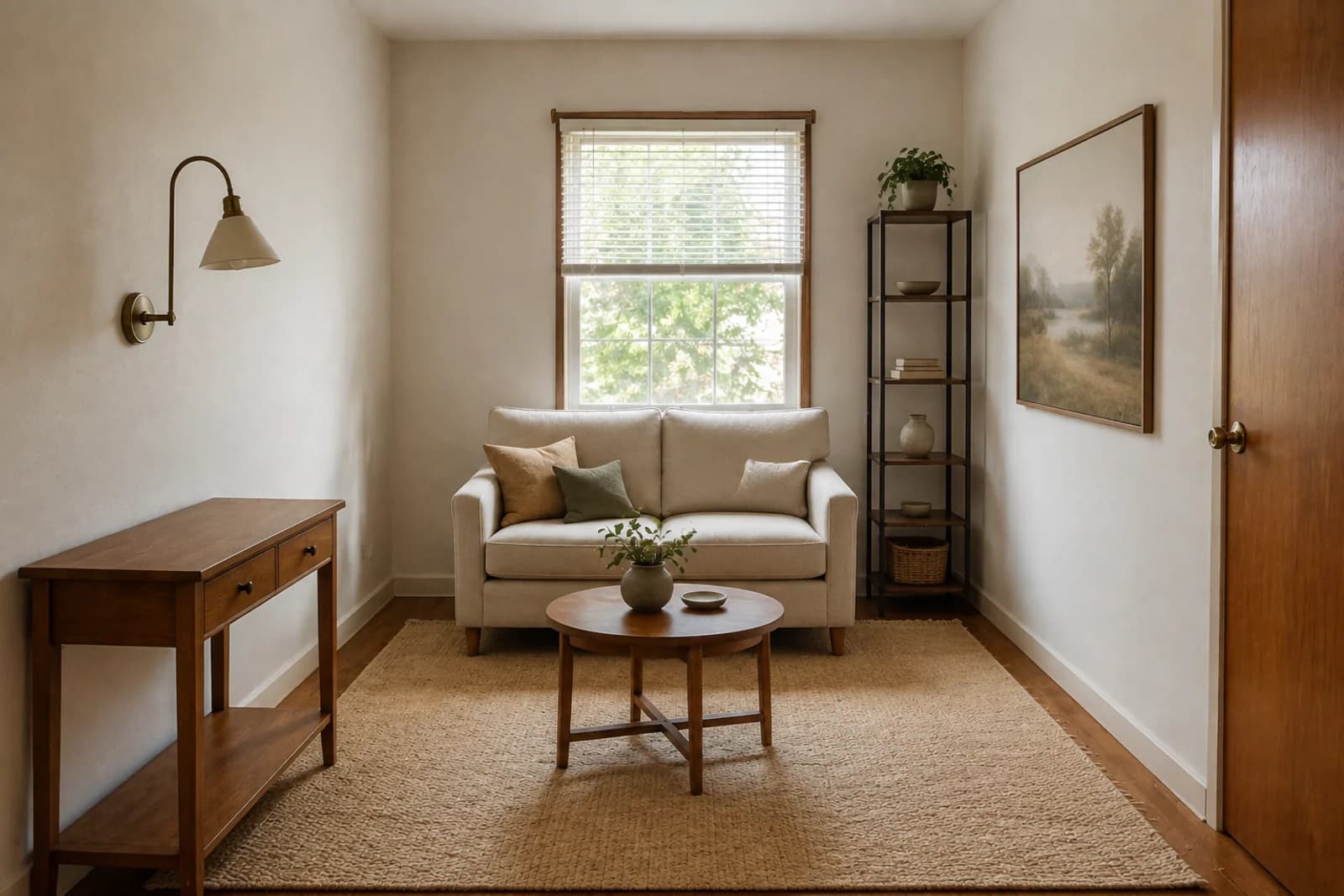
Good lighting makes a small room feel more open than it is. Layer ceiling, wall, floor and table lighting where you can. A single overhead bulb does the room no favors. Our living room guide has the full lighting plan.
Keep the palette restrained
You do not have to paint everything white, but too many competing colors in a small footprint reads as visually busy fast. A simple palette creates continuity the room cannot otherwise fake.
Use mirrors, but sparingly
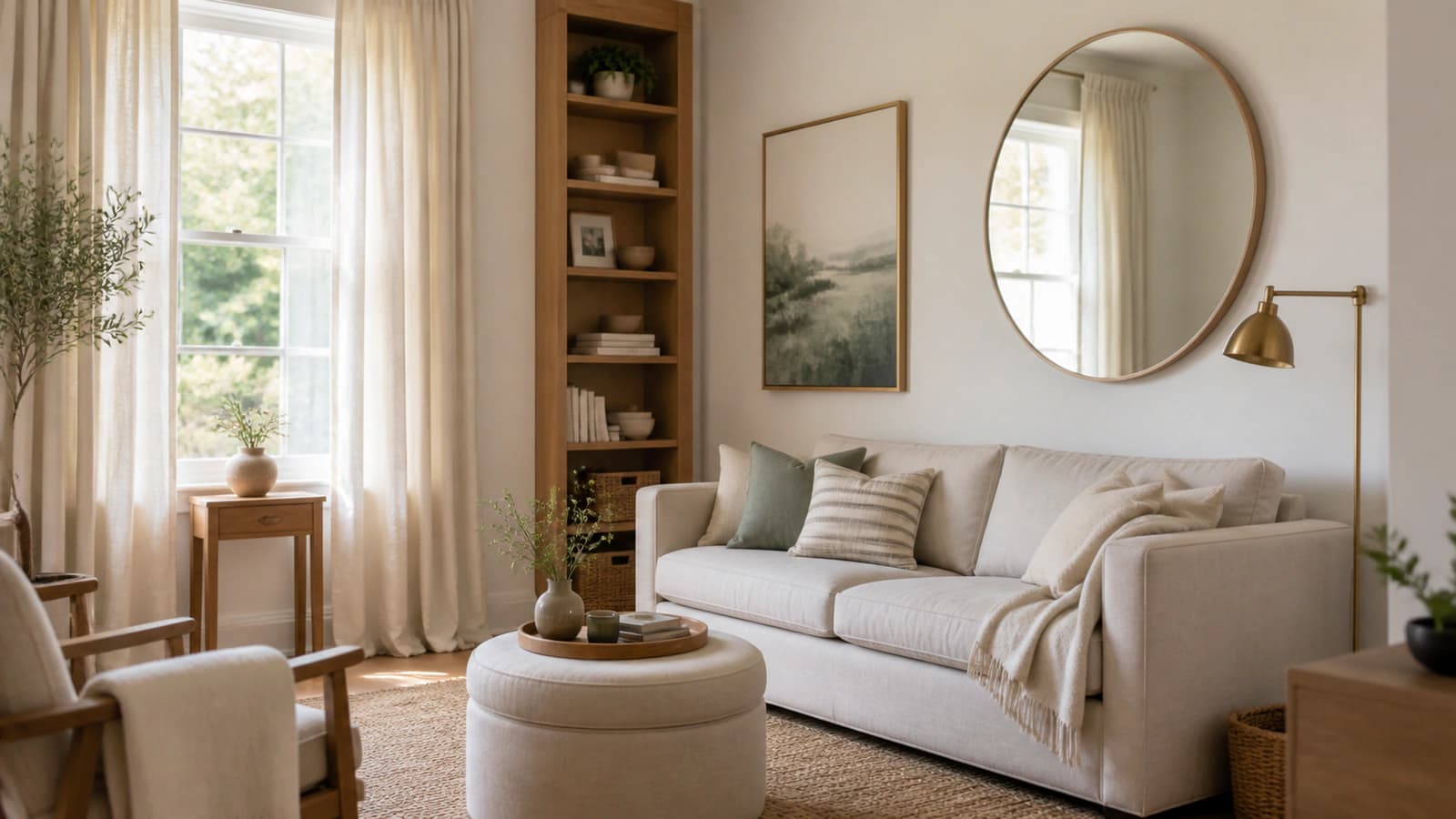
One large, well-positioned mirror does more for a room than five small ones scattered across different walls. Mirrors reflect light and add a sense of depth, but covering every wall tips into disorienting rather than expansive.
Look up
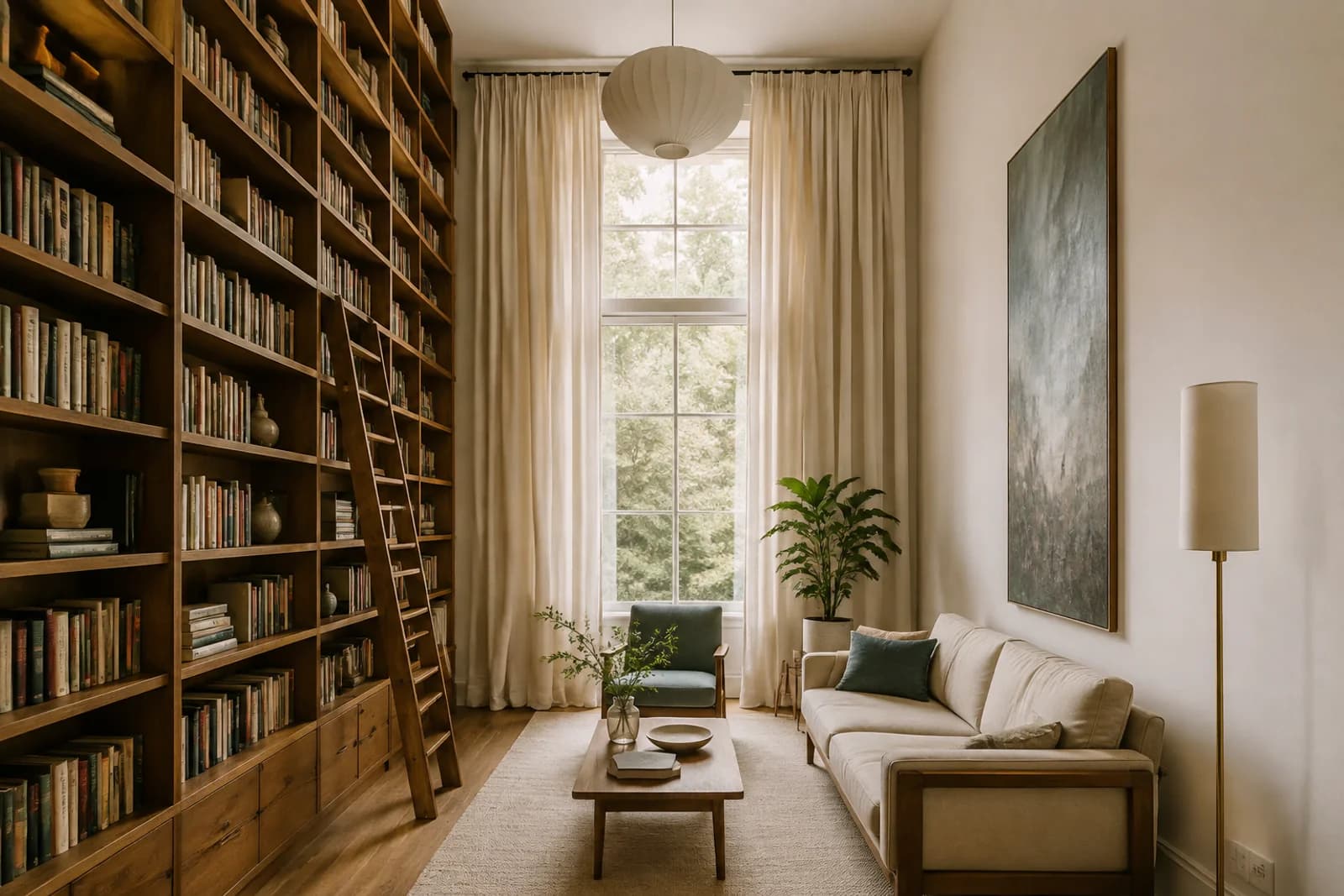
If floor space is capped, vertical space is not: tall storage, vertical artwork, high shelving, floor-to-ceiling curtains. All of it draws the eye upward and makes the ceiling height do some of the work the floor plan cannot.
Test layouts before you move furniture
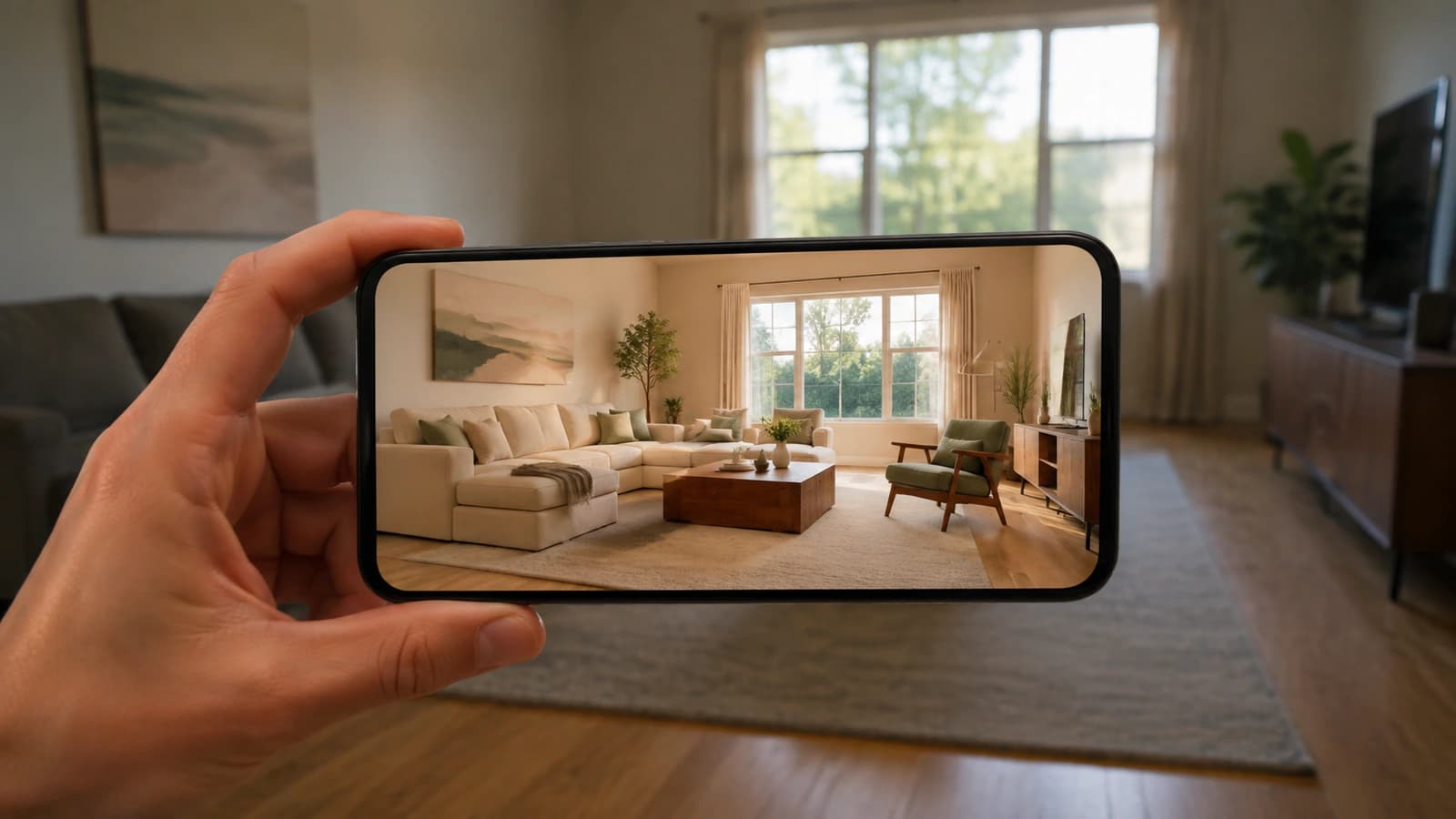
This is where a design tool earns its keep. Instead of physically rearranging furniture over and over to see what fits, photograph the room and test arrangements first. Clavis can redesign the actual room from a phone photo, or work from a floor plan, so you are testing directions before you are moving a couch for the third time. The small bedroom section of our bedroom guide applies the same thinking to the other room where space is tightest.
Small does not mean boring
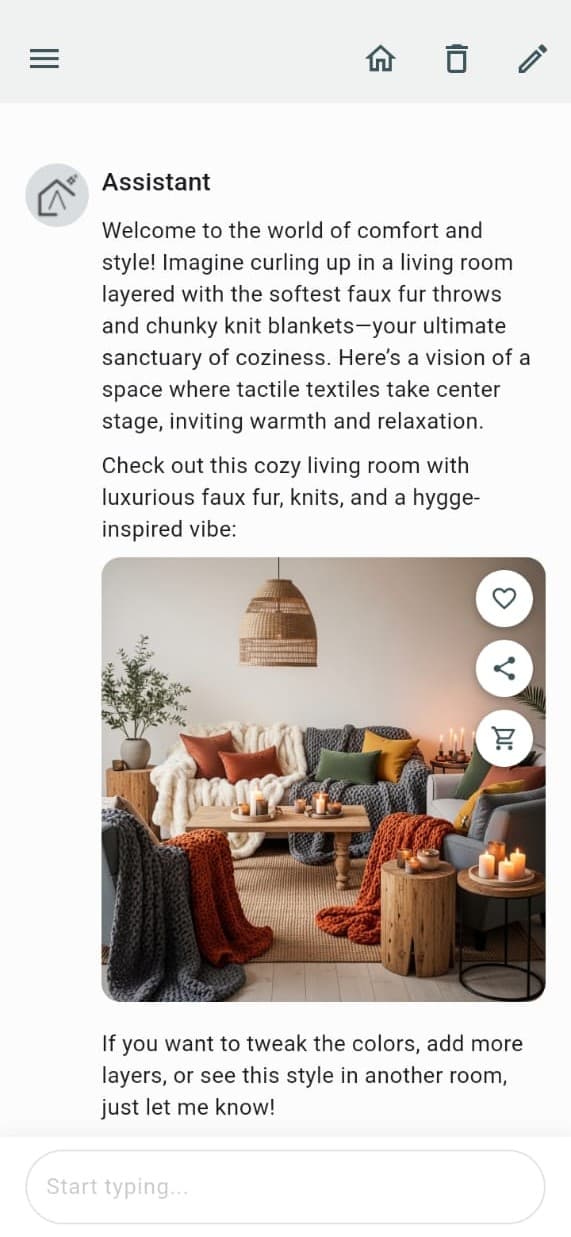
A small home can still have bold artwork, real texture, color and personality. The goal is not to make everything disappear. It is to make everything work harder. For more on which styles suit compact rooms, minimalist, Scandinavian and Japandi all have a head start; see how to find your interior design style.
A smaller space does not need fewer ideas. It needs better ones.