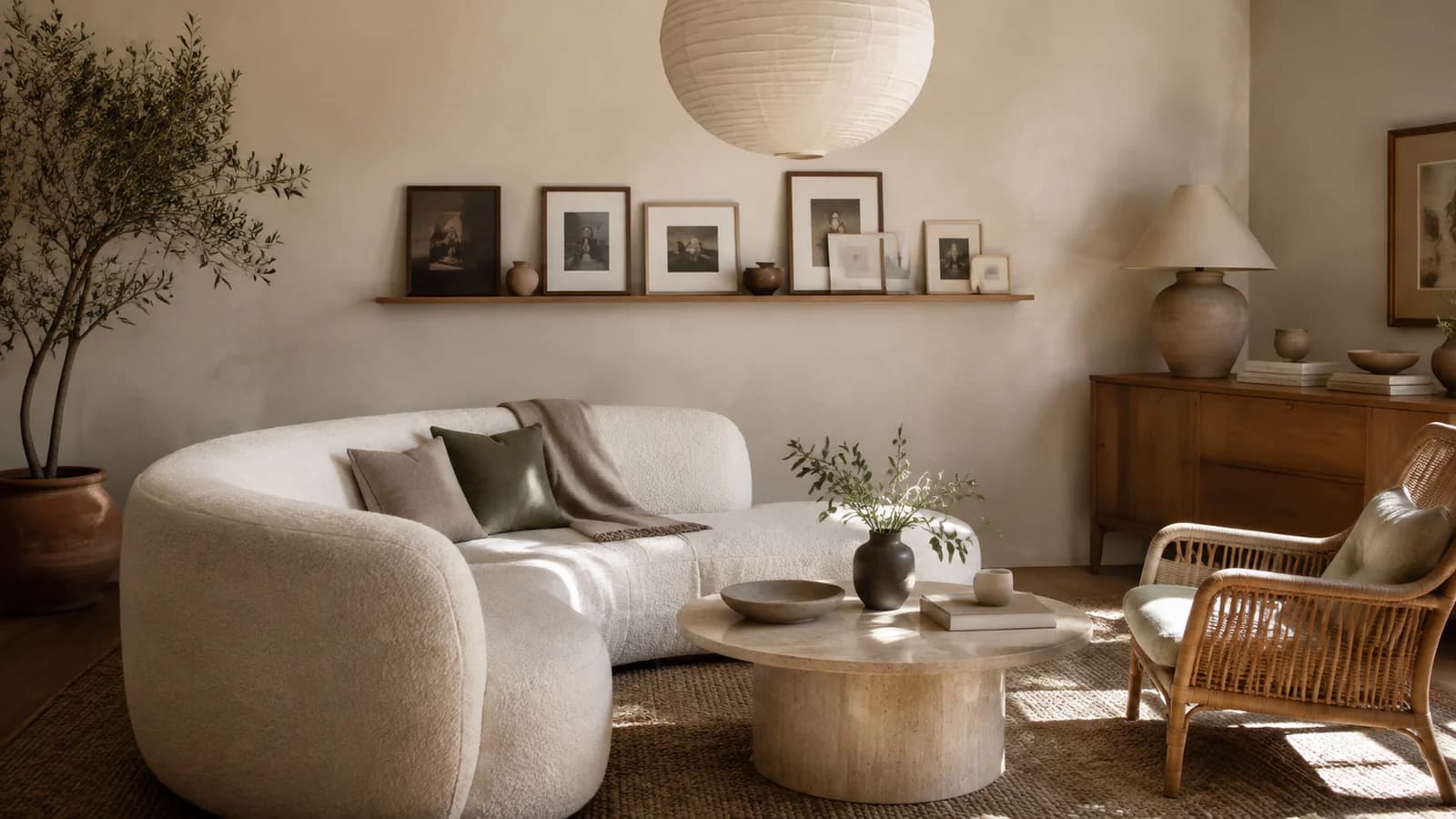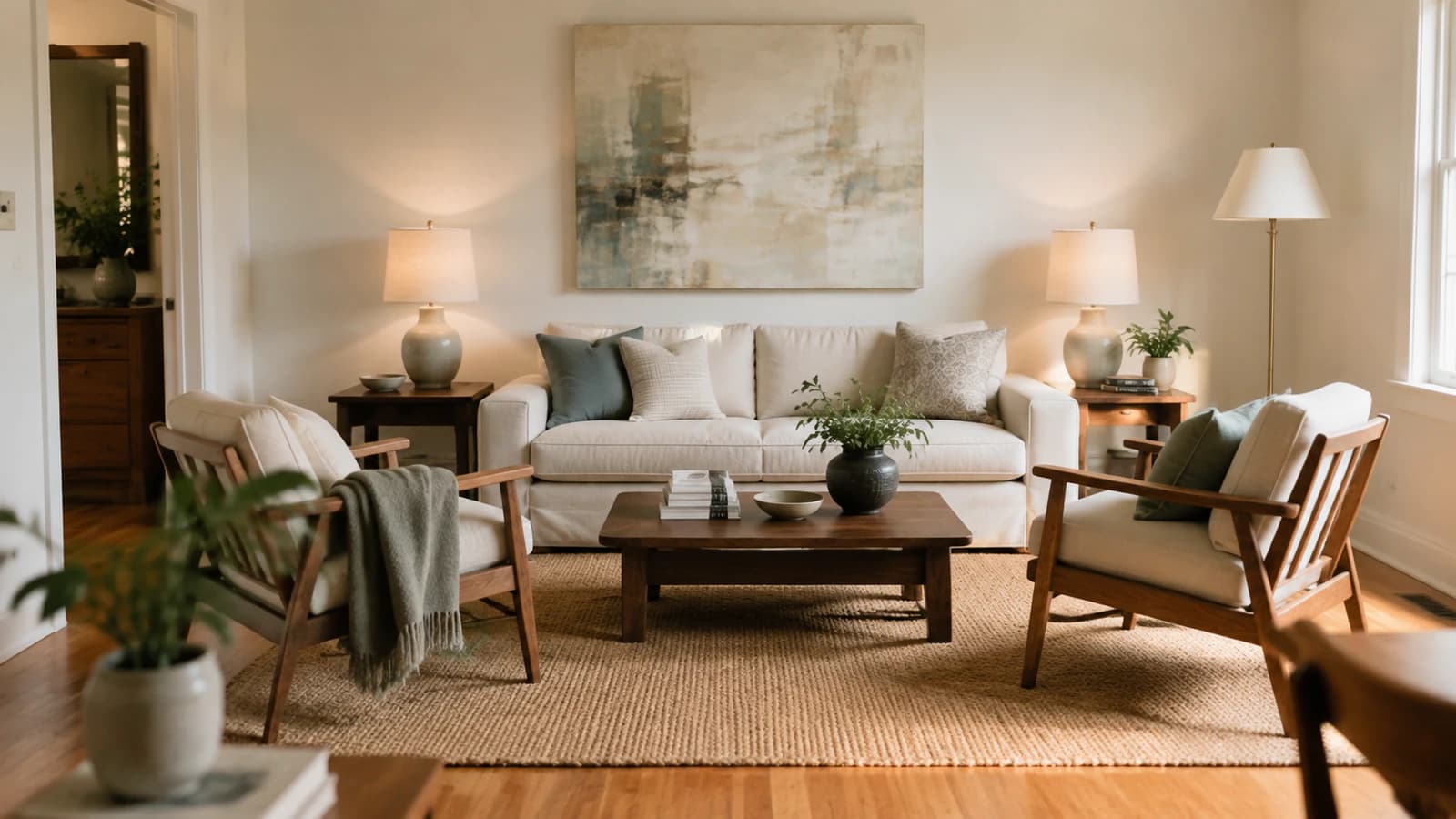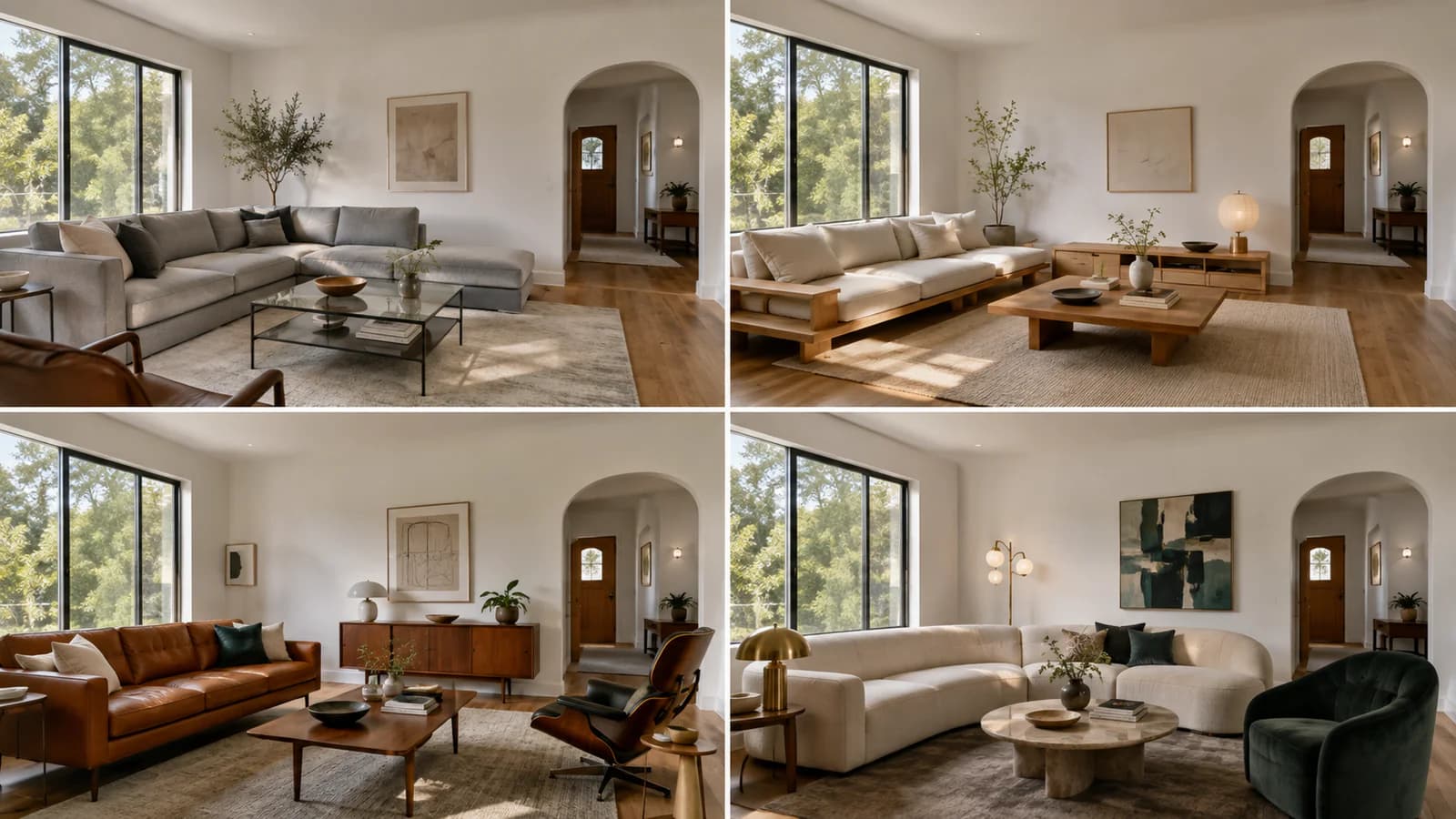
That is why the best interior design ideas are not necessarily expensive or complicated. They just help you make better decisions about the space you already have. Here are 25, grouped by the problem they solve.
Stop decorating room by room
Your home should feel connected, though it does not need to match. Consistency without uniformity keeps a home from feeling disjointed or, worse, boring.
1. Carry one thread through the whole house
Warm wood, brass hardware, a particular neutral, a preference for natural texture. Pick one and let it show up in every room, even in a small way.
2. Repeat a material, not a piece
You do not need the same chair in three rooms. You need walnut in three rooms: a console here, a frame there, a tray on the kitchen counter.
3. Treat hallways as connectors
A hallway painted in the same warm white as the rooms it joins makes the whole floor read as one place. It is the cheapest continuity you can buy.
Pick a dominant color and stop there
You do not need a complicated palette. Choose one base color, one or two supporting colors, and use everything else as an accent. The simpler the palette, the easier it is to combine furniture and decor without second-guessing every purchase.
4. One base, two supports, then stop
The base goes on the walls and the largest pieces. The supports go on secondary furniture and textiles. Accents are small and swappable.
5. Borrow a combination that already works
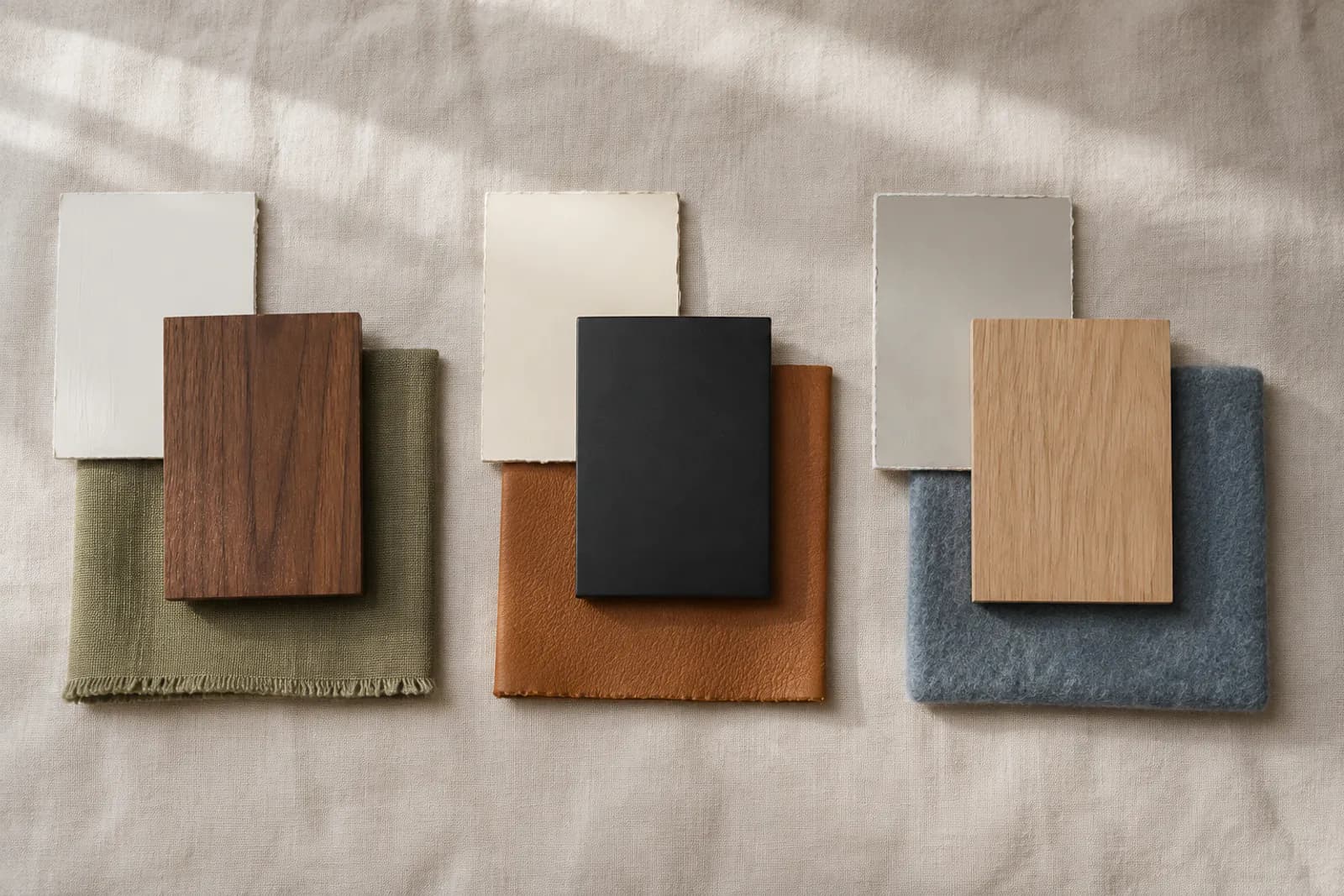
| Palette | Feels like | Works especially well in |
|---|---|---|
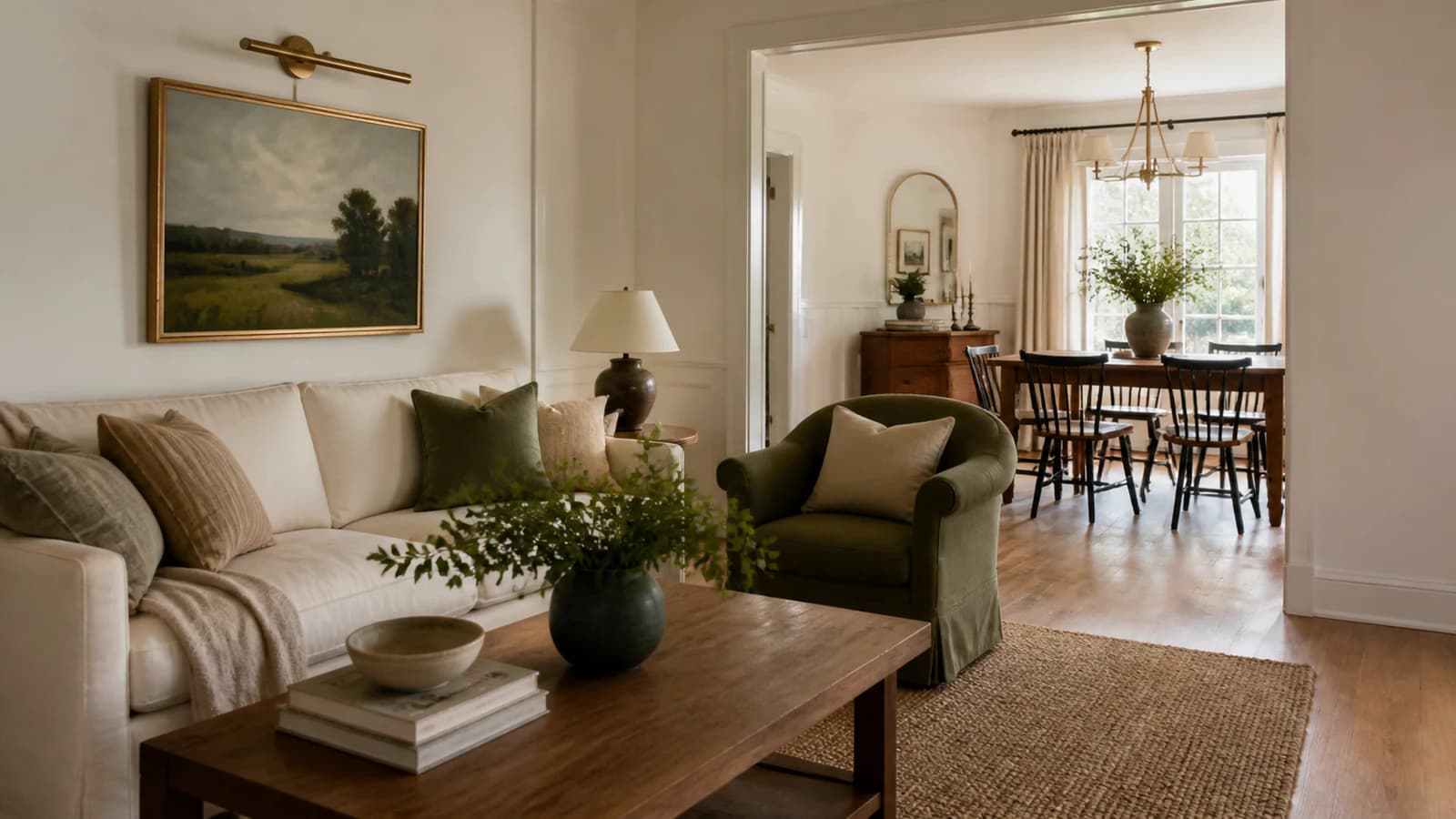
| Warm white + walnut + olive green | Grounded, natural, quietly modern | Living rooms and open-plan spaces |
| Cream + black + caramel | Tailored, warm, a little graphic | Kitchens, entryways, home offices |
| Soft gray + oak + dusty blue | Calm, airy, Scandinavian | Bedrooms and bathrooms |
6. Test the palette in your room's own light
A north-facing room turns warm white cooler; a west-facing room turns gray warmer at 5 p.m. Paint a large swatch or, faster, test the palette on a photo of the room before you commit.
Mix old and new
An entirely new room can feel strangely impersonal. Something with history breaks up the newness.
7. Add one piece with a past
A vintage mirror, an antique side table, a secondhand chair. One is enough to make a new room feel like it has been lived in.
8. Give a family object a prominent place
A photograph, a ceramic, a quilt. When it sits at eye level instead of in a drawer, the room starts to tell your story rather than a store's.
9. Reframe instead of replacing
Old prints and photographs in new, consistent frames read as a considered collection. It is one of the cheapest upgrades in this list.
Use texture when color goes quiet
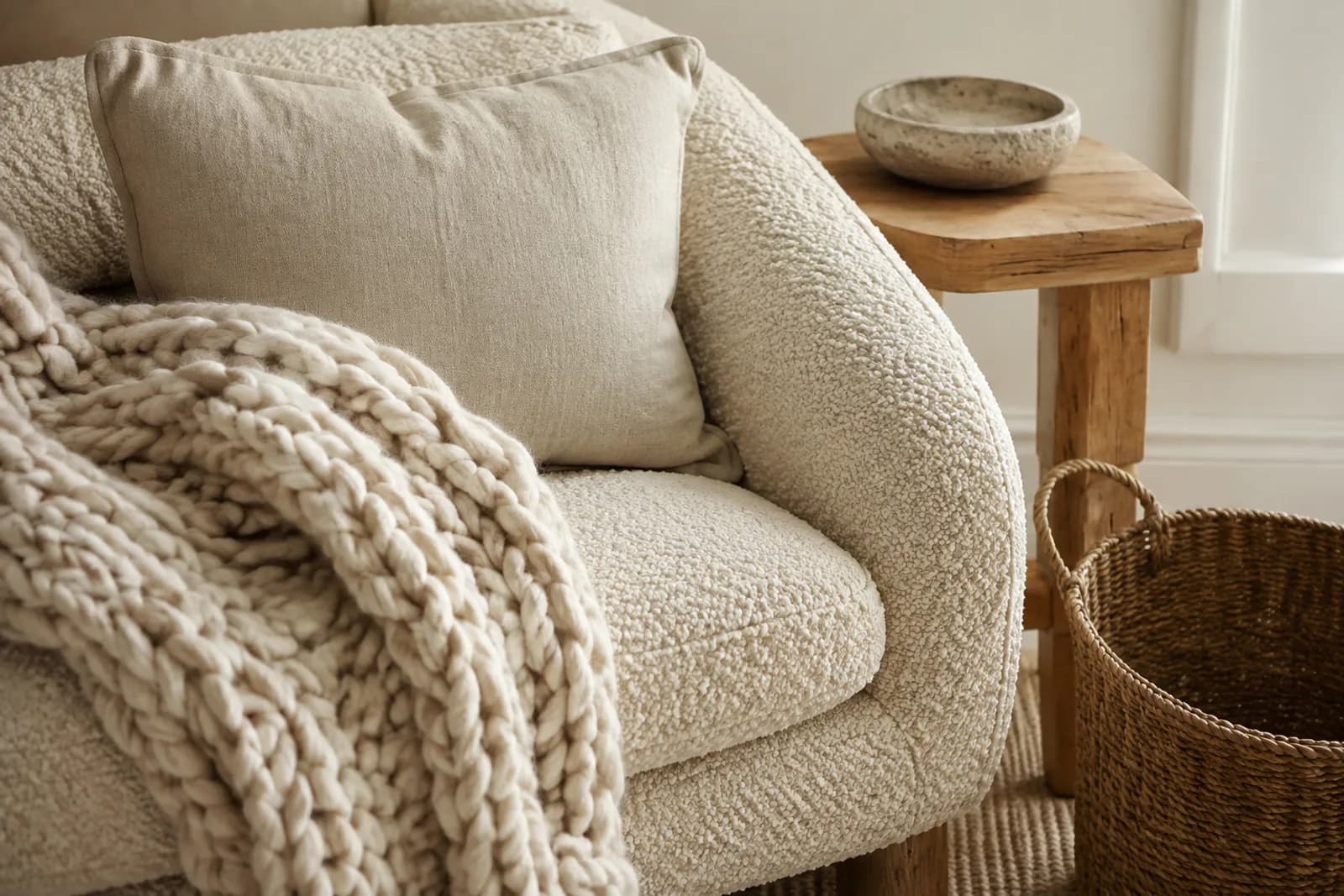
Neutral does not have to mean flat. If you are working in beige, cream and warm white, bring in depth through linen, wool, boucle, wood, stone or woven materials. Texture does the job color would otherwise do.
10. Layer three textures in every seating area
Something soft (boucle or wool), something smooth (leather or lacquer) and something natural (oak, rattan, stone). Three is enough for depth without noise.
11. Contrast matte and sheen
A matte linen sofa next to a glazed ceramic lamp, or a chalky wall behind a polished brass frame. The contrast reads as richness even when the colors match.
12. Bring in something woven
A jute rug, a seagrass basket, a cane chair back. Woven surfaces add warmth without adding color, which is exactly what a neutral scheme needs.
Do not underestimate the rug
A rug defines a room. It visually ties furniture together and signals "this is a zone." But size matters. Too small, and even a beautifully furnished room can feel like it is floating apart.
13. Size up
At minimum, the front legs of every seat should sit on the rug. If you are choosing between two sizes, the larger one is almost always right.
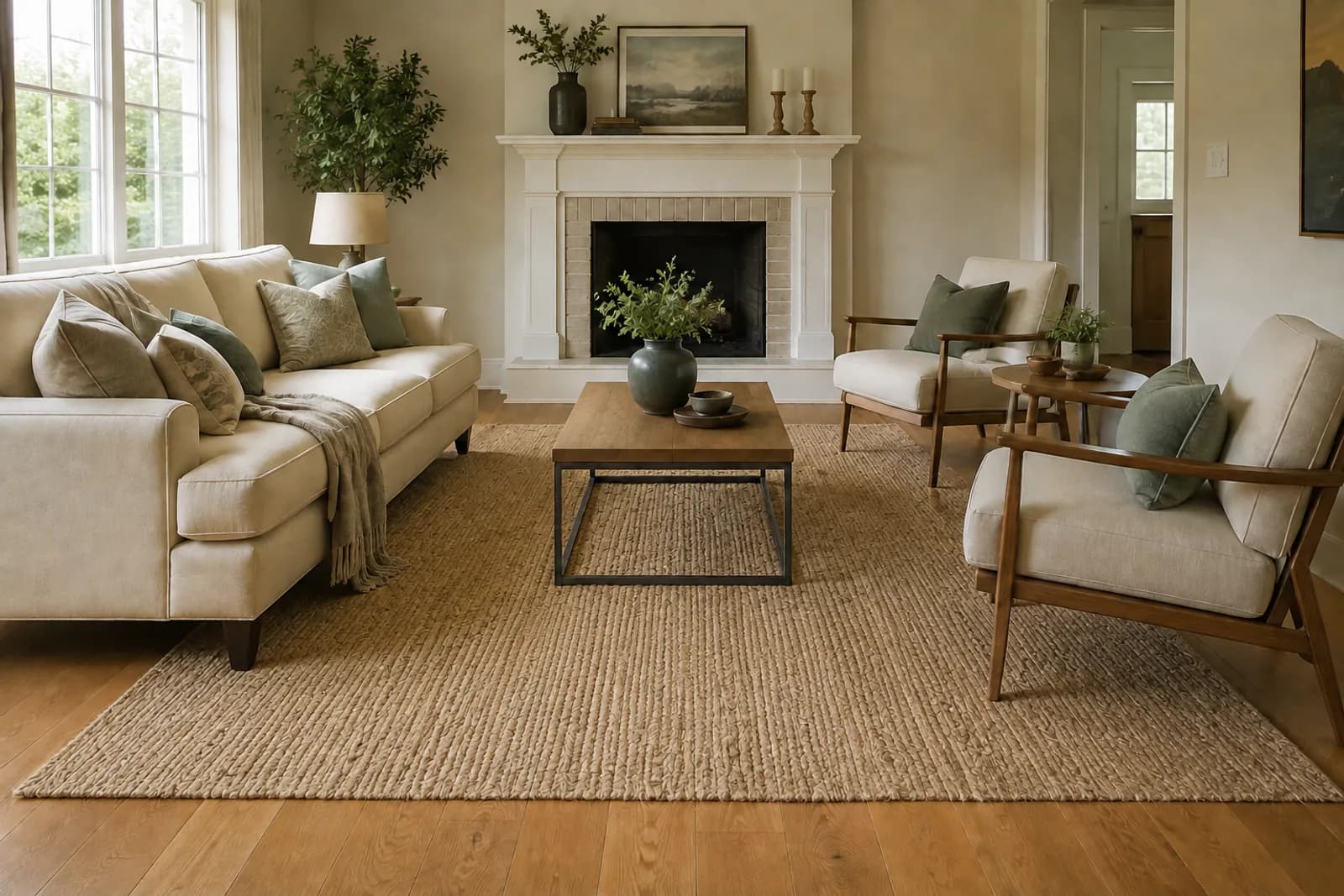
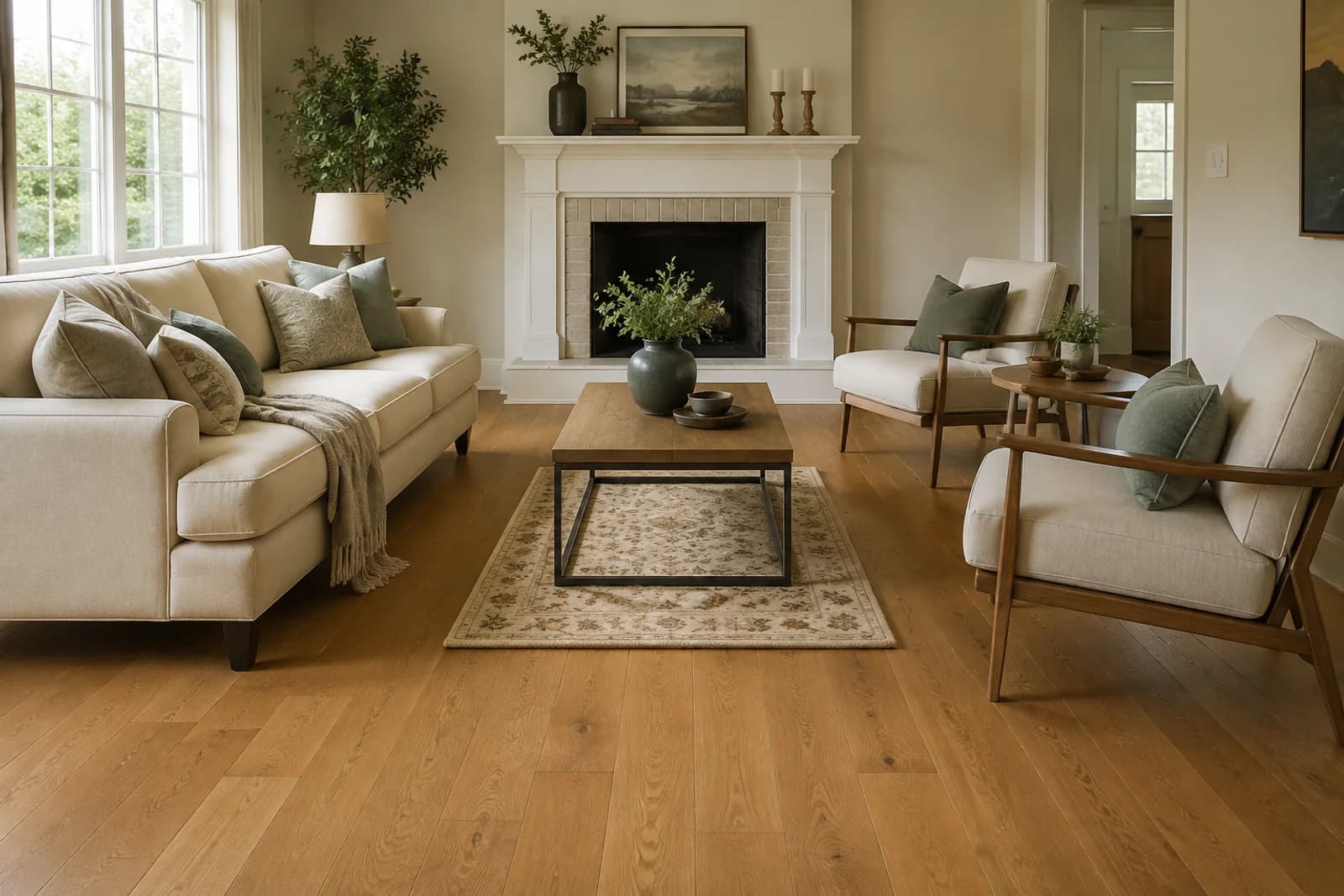
14. Use rugs to zone an open plan
In a combined living and dining space, one rug per zone tells the eye where each room begins, without a single wall.
15. Layer a small rug over a large neutral one
If you love a small vintage rug, float it over a large flat-weave in a plain color. You keep the character and fix the scale.
Create an actual focal point
Every room needs somewhere for the eye to land: artwork, a fireplace, a statement sofa, an architectural feature, a dramatic light fixture. Without one, a room reads as scattered no matter how nice each individual piece is.
16. Decide what the eye lands on first
Stand in the doorway. Whatever you see first is your focal point, whether you chose it or not. If it is the TV or a radiator, give the eye something better.
17. Scale art to the wall, not the frame you already own
Art above a sofa should span roughly two-thirds of its width. One large piece beats five small ones scattered at different heights.
18. Let a light fixture be the focal point
A sculptural pendant over the dining table or a dramatic floor lamp in a corner does double duty: it lights the room and anchors it.
Resist decorating empty space just because it is empty
Restraint is often what makes a room feel expensive. Not every shelf needs an object.
19. Leave one shelf empty
On any bookcase or open shelving unit, keep one shelf clear. It gives the eye a rest and makes everything around it look chosen.
20. Edit every surface down to three things
Coffee table, console, nightstand: three objects of different heights, then stop. If a fourth arrives, one leaves.
Design around how you actually live
Kids in the house? Design for kids. Work from home? Design for that. Entertain often? Design for conversation. A beautiful room that does not function for your life is not good design. It is a photo.
21. Choose fabrics for the life you have
Performance linen and wool blends look as good as the delicate versions and survive children, pets and red wine. Beauty you cannot sit on is not beauty for long.
22. Give work-from-home its own zone
Even a corner with a small desk, a task lamp and a chair that is not a dining chair keeps work from spreading across the whole house.
23. Arrange for conversation, not for the TV
If you entertain, angle seats toward each other and keep them within about eight feet. The TV can still be there. It just should not be the only thing the furniture points at. Our living room guide walks through the layout step by step.
Visualize before you spend
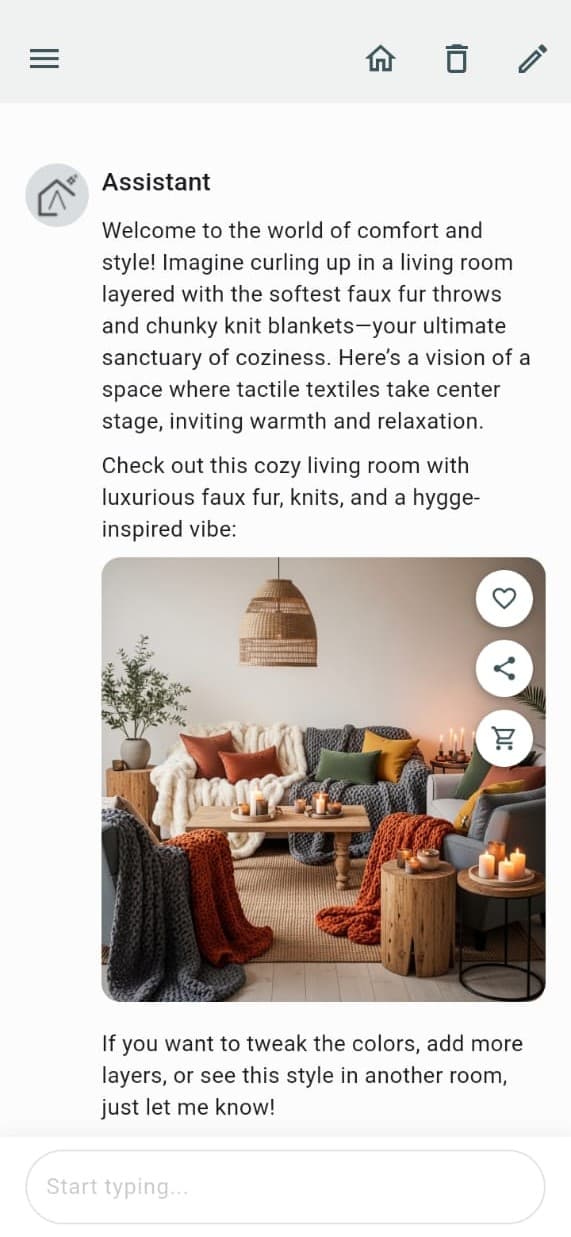
Before committing real money to furniture, see how it actually looks in your space. Clavis lets you upload a photo of your room, describe the direction you are after, and explore a photorealistic version of it, connected to real products you can shop directly.
24. Photograph the room and try the idea on it
Wondering whether idea 13 or idea 17 is the one your room needs? Upload a photo and test it. The render answers in seconds what a return would answer in three weeks.
25. Test three directions before you buy one
Warm minimal, Japandi, something with more color. Regenerate until one makes you want to come home. Then buy for that room, not for the moodboard. For where design is heading this year, see the 2026 home interior design trends.
The best interior design ideas are not expensive or complicated. They help you make better decisions about the space you already have.